


Medicinal Cannabis
Sativas
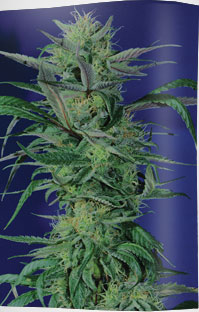
Cannabis sativa originated predominantly in Asia, the Americas, and Africa. Each has their own specific characteristics, but most have these traits: tall plants with long internodal spacing, a large sprawling root system, large thin leaves, and somewhat sparse flowers when grown indoors under lights. Mexican, Columbian, Thai, and Jamaican strains can be very potent, with high THC to CBD ratio that produces a soaring, energetic, "speedy" high.
Indicas
Cannabis indica originated in Pakistan and India. Indica is prized by indoor growers and breeders for its short, bushy growth, thick stems, broad leaves, and dense fat flowers. Indica strains generally contain a higher percentage of CBD than sativas. This produces the effect often described as a heavy, incapacitating "stone."
Hybrids
Most available cannabis strains today are hybrids that provide the best of both worlds. Cannabis breeders cross breed to retain specific characteristics of each strain of sativa and indica varietals.
Strain Identification and Effects:
Cannabis Sativa:
- Cerebral: affects the brain and nervous system
- Focus
- Psychoactive
- Enhances creativity
- Produces a change in perspective
- Treats: depression, fatigue, ADD, ADHD, mild social anxiety, among others
- Not for: severe pain or insomnia
Cannabis Indica:
- Physical: affects the body and muscular system
- Relaxing, sleepy
- Anesthetic, pain reduction
- Anti-inflammatory
- Treats: pain, stress, insomnia, neuropathy, menstrual cramps, glaucoma, side effects of chemotherapy, epilepsy, among others
- Not for: depression or fatigue
Hybrids:
- Sativa / Indica bred together (Indica or Sativa Dominant)
- Sativa Dominant Hybrid: Mostly Sativa
- Indica Dominant Hybrid: Mostly Indica
Emerging Clinical Applications for Cannabis and Cannabinoids ADD / ADHD, AIDS, Alzheimer’s disease, Amyotrophic Lateral Sclerosis, anorexia, anxiety, asthma, ataxia, bipolar, cachexia, cancer, chronic fatigue, chronic pain, cramps, Crohn’s disease, depression, Diabetes mellitus, Dystonia, epilepsy, fever, Fibromyalgia, Gastrointestinal disorders, glaucoma, Gliomas, Hepatitis C, Human Immunodeficiency Virus, Hypertension, Incontinence, insomnia, Methicillin-resistant Staphylococcus aureus, migraine, Multiple Sclerosis, nausea, neuralgia, neuropathy, Osteoporosis, PMS, Pruritis, PTSD, rheumatism, Rheumatoid arthritis, sickle cell anemia, Sleep apnea, spasms, spinal injury, stress, Tourette’s syndrome
We carry a rotation of various hybrids, sativas, and indicas.